Need fire damage restoration in Polk, FL? Learn repair costs, methods, and how to choose a local contractor. Get help from Major Restoration.
A house fire leaves behind more than charred walls. Smoke seeps into every corner. Soot coats surfaces you cannot see. Water from fire hoses saturates floors and insulation. In Polk County, Florida, where humidity stays high year-round and many homes sit on slab foundations with limited ventilation, the damage can spread fast if you do not act quickly.
This guide explains what fire damage restoration actually involves, which repair methods work best for local conditions, what the process costs, and how to choose a contractor who will return your home to a safe, livable state.
Why Fire Damage in Polk County Demands Specialized Attention
Polk County sits in the heart of Florida between Tampa and Orlando. The subtropical climate means average humidity hovers around 73 percent, and summer storms are common. After a fire, that humidity traps moisture inside wall cavities, under flooring, and inside HVAC ducts. Within 24 to 48 hours, mold can start growing on water-damaged materials. That is why restoration in this region is not just about removing burnt debris. It is about controlling moisture, preventing secondary mold damage, and dealing with the specific building codes that govern reconstruction in Florida. fire damage restoration in Polk, FL
Many homes in Polk County were built in the 1970s and 1980s with aluminum wiring, older drywall, and single-pane windows. These materials react differently to heat and smoke than modern construction. Aluminum wiring, for example, can become brittle after exposure to high temperatures and may need replacement even if it looks intact. A licensed contractor in the Lakeland-Winter Haven area told us that roughly forty percent of fire restoration jobs in Polk County involve hidden electrical damage that a surface inspection would miss.
Types of Fire Damage and How Restoration Differs
Not all fire damage is the same. The restoration approach depends on what burned, how hot the fire got, and how long it burned before firefighters arrived.
Minor Smoke and Soot Damage
This is the most common scenario. A kitchen grease fire is extinguished quickly, but smoke travels through the entire house. Soot lands on walls, ceilings, and inside cabinets. Restoration focuses on surface cleaning, deodorization, and HVAC duct cleaning. No structural rebuild is needed. Costs stay on the lower end of the spectrum. fire damage restoration in Polk, FL
Moderate Structural Fire Damage
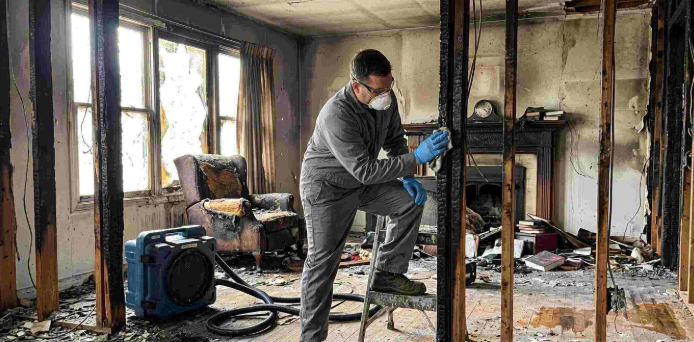
Heat has damaged drywall, flooring, cabinetry, or roofing. Water from suppression has soaked into subfloors and insulation. Restoration includes demolition of damaged materials, water extraction and drying, soot removal, odor control, and rebuilding affected areas. This is the typical scope for a room-level fire.
Major Structural Fire Damage
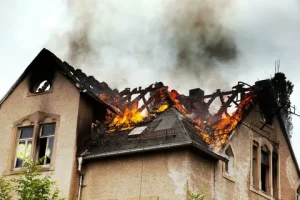
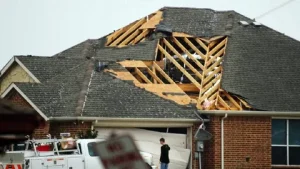
The fire has compromised load-bearing walls, roof trusses, or the foundation. Reconstruction is extensive. The home may be uninhabitable for months. This level of damage requires structural engineering assessment, full permitting, and coordination with your insurance carrier on a rebuild scope. fire damage restoration in Polk, FL
What Happens During Professional Fire Damage Restoration
Restoration is not a single service. It is a sequence of steps, each building on the one before it. Skip a step, and you risk mold, persistent odors, or structural failure down the road.
Step one: Emergency board-up and stabilization.
The crew secures broken windows, tarp damaged roof sections, and shuts off utilities. This prevents weather damage and unauthorized entry. In Polk County, where afternoon thunderstorms are frequent, a tarped roof can mean the difference between water damage and dry interior space.
Step two: Water extraction and structural drying.
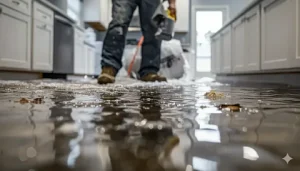
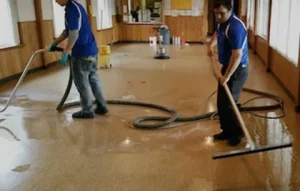
Firefighters may use 150 to 180 gallons of water per minute. That water must be extracted immediately. Commercial dehumidifiers and air movers run for three to five days, with daily moisture readings. In Florida’s humid climate, this step is non-negotiable. Damp materials that are not dried within 48 hours become a mold risk.
Step three: Soot and smoke residue removal.
Soot is acidic. Left on granite countertops, chrome fixtures, or painted walls, it causes permanent etching within hours. Technicians use HEPA vacuums, chemical sponges, and cleaning agents matched to the residue type. Protein fires from cooking produce a different soot than synthetic material fires from plastics and fabrics. fire damage restoration in Polk, FL
Step four: Odor control and HVAC cleaning.
Smoke travels through ductwork, depositing odor deep inside the system. Thermal fogging, ozone treatments, and hydroxyl generators break down odor molecules. HVAC duct cleaning is critical because contaminated ducts will recirculate smoke smell indefinitely.
Step five: Contents pack-out and cleaning.
Salvageable belongings — furniture, electronics, textiles, documents — are inventoried, packed, and transported to a facility for specialized cleaning. Ultrasonic cleaning works for electronics. Ozone chambers deodorize textiles. Dry cleaning handles garments.
Step six: Reconstruction and final verification.
Damaged drywall, flooring, roofing, and electrical systems are replaced. Final air quality testing and moisture verification confirm the home is safe. Your restoration team coordinates with your insurance adjuster throughout.
What Fire Damage Restoration Costs in Polk, FL
Pricing depends on the damage severity, the size of the affected area, and whether reconstruction is included. Here is what homeowners in Florida typically see.
Minor smoke damage cleanup starts around $3,000 to $8,000. This covers soot removal, deodorization, and duct cleaning for a home with no structural damage. Moderate fire damage with structural repairs typically runs $10,000 to $35,000. Major fires requiring full reconstruction can exceed $50,000 and climb past $100,000 for large homes with extensive damage.
On a per-square-foot basis, restoration costs average $4 to $7, with most homeowners paying around $5.50 per square foot for the remediation scope. Reconstruction adds $1.50 to $3 per square foot for drywall alone, with roofing, electrical, and other systems adding more. fire damage restoration in Polk, FL
Several factors drive the final bill in Polk County:
- Scope of water damage. Fire suppression water often causes as much damage as the fire itself. Water extraction, drying, and antimicrobial treatment add $1,000 to $6,000 or more.
- Contents restoration. Cleaning and deodorizing furniture, electronics, and textiles runs $200 to $1,000 per item depending on material and contamination level.
- Permit and inspection fees. In Polk County, any reconstruction involving structural components, electrical, plumbing, or mechanical systems requires a permit under Florida Building Code Section 105.1. Your contractor should pull these permits and include the fees.
- Mold prevention. Florida’s humidity means mold remediation is often bundled into fire restoration. This adds cost but prevents a much larger problem later.
- Electrical replacement. Homes with aluminum wiring or outdated panels may need full electrical replacement, which is not always covered by standard restoration scopes.
How to Choose the Right Fire Damage Restoration Contractor
After a fire, you are under pressure. Insurance adjusters call. Your family needs a place to stay. A contractor who shows up uninvited at the scene is a red flag. Here is how to evaluate your options calmly.
Verify licensing and insurance. Florida does not require a separate license for fire restoration cleanup, but any reconstruction work valued above $500 requires a state-issued contractor license from the Florida Department of Business and Professional Regulation. Ask for the license number and confirm it is active. Check general liability and workers’ compensation coverage. If a worker is injured on your property and the company lacks coverage, you could be held responsible.
Look for IICRC certification. The ANSI/IICRC S700 Standard for Professional Fire and Smoke Damage Restoration, published in 2025, governs how restoration should be performed. Technicians certified in Fire and Smoke Restoration (FSRT) and Odor Control (OCT) have been trained on these standards. This is not a legal requirement, but it signals competence.
Demand a written scope and estimate. The estimate should break down each phase: emergency services, water mitigation, soot removal, odor control, contents handling, and reconstruction. Vague language like “clean and restore as needed” is a warning sign.
Ask about local permitting experience. A contractor who has rebuilt homes in Polk County knows the Polk County Building Division’s inspection schedule and the specific documentation required for fire damage reconstruction. That local knowledge speeds up the process.
Check references for fire-specific work. A company with great reviews for carpet cleaning may not have deep experience with structural fire rebuilds. Ask for references from recent fire restoration jobs in Polk County.
A contractor who works exclusively on fire and smoke damage in the Polk County area — like Major Restoration — will have handled the local permit process, know how Florida’s humidity affects drying timelines, and carry the trade-specific insurance that general handymen often skip. That local focus means faster mobilization and fewer surprises.
FAQ
How long does fire damage restoration take in Polk County?
Minor smoke cleanup takes three to ten days. Moderate fire damage with structural repairs typically takes two to eight weeks. Major fires requiring full reconstruction can take two to six months depending on permitting, material availability, and insurance claim resolution.
What does fire damage restoration cost for a typical home in Polk, FL?
Minor smoke damage runs $3,000 to $8,000. Moderate damage with rebuilds costs $10,000 to $35,000. Major structural fires can exceed $50,000. Most restoration projects in Florida fall in the $15,000 to $30,000 range when water damage and reconstruction are included.
Can I stay in my home during fire damage restoration?
For minor smoke damage limited to one room with no structural concerns, you may stay during cleanup. For any fire involving structural damage, water saturation, or significant smoke contamination, it is unsafe to remain. Soot particles and chemical residues pose health risks. Your insurance policy typically covers additional living expenses while you are displaced.
Does homeowners insurance cover fire damage restoration in Florida?
Yes. Standard HO-3 homeowners insurance policies cover fire and smoke damage to the structure, personal property, and additional living expenses while you are displaced. Your out-of-pocket cost is typically your deductible plus any upgrade choices beyond like-kind replacement. Hidden damage found during restoration usually requires a supplemental claim.
What permits are needed for fire damage reconstruction in Polk County?
Any reconstruction involving structural components, electrical, plumbing, gas, mechanical, or roofing systems requires a building permit under Florida Building Code Section 105.1. Your contractor must apply through the local building department and schedule inspections. Only state-licensed contractors or owner-builders can pull permits.
How does Florida’s humidity affect fire damage restoration?
High humidity slows drying and increases mold risk. Materials that would dry in 48 hours in a drier climate may take 72 hours or more in Polk County. Restoration crews must run dehumidifiers longer and monitor moisture levels more frequently. Mold prevention treatments are often necessary.
What is the difference between soot and smoke damage?
Soot is the physical residue left after a fire — a fine, black or gray powder made of carbon and other particles. Smoke damage is the broader term that includes soot, odor, and chemical residues deposited on surfaces and inside materials. Soot is cleaned with HEPA vacuums and chemical sponges. Smoke odor requires thermal fogging, ozone, or hydroxyl treatments.
Can my belongings be saved after a fire?
Many items can be restored if they were not directly burned. Electronics, furniture, textiles, and documents can often be cleaned using ultrasonic cleaning, ozone chambers, and dry cleaning. Items directly exposed to flames or extreme heat may not be salvageable. A contents inventory by your restoration team determines what can be saved.
Why is water damage such a big part of fire restoration?
Firefighters use 150 to 180 gallons of water per minute to extinguish a fire. That water soaks into drywall, insulation, subfloors, and framing. If not extracted and dried quickly, it causes warping, swelling, and mold growth. Water damage restoration is often as expensive as the fire cleanup itself.
How do I know if a restoration contractor is qualified?
Ask for their Florida contractor license number and verify it through the Department of Business and Professional Regulation. Look for IICRC certifications in fire and smoke restoration. Request a written estimate with a detailed scope. Check that they carry general liability and workers’ compensation insurance. Ask for local references from fire restoration jobs.
What should I do immediately after the fire department leaves?
Do not enter the property until the fire department declares it safe. Contact your insurance company to start a claim. Take photos of the damage if it is safe to do so. Do not attempt to clean soot yourself — improper cleaning can push soot deeper into porous surfaces and make the damage worse. Call a restoration contractor for an emergency board-up and assessment.
Conclusion
A fire is one of the most disruptive events a homeowner can face. The path back to normal starts with securing the property, documenting the damage, and choosing a restoration contractor who understands both the technical work and the local requirements in Polk County.
If you want a local team that knows Polk County’s permitting process, building codes, and humid climate challenges, Major Restoration offers free assessments and can walk you through your options without pressure. Reach out to Major Restoration for a clear look at what your home needs and a restoration plan that gets you back inside safely.