The moments after a fire can feel disorienting and overwhelming. Once the firefighters leave, you are left facing a home that is no longer the safe space you remember. Knowing what to do after a house fire is not intuitive, but a clear, methodical approach can make all the difference in protecting your property and your family. This guide outlines the immediate, critical actions you should take to begin the recovery process safely and effectively in Manatee County.
Prioritizing Safety and Securing Your Property
After the fire department declares the site safe, your first instinct might be to rush inside and assess the damage. We strongly advise against this. A building that appears stable on the outside can conceal severe structural weaknesses in floors, walls, and the roof. The water used to extinguish the flames can compromise the integrity of building materials, creating unseen hazards.
Beyond structural risks, invisible dangers linger in the air. Soot and smoke particles are not just messy. They are often toxic and can cause significant respiratory issues if inhaled. Furthermore, electrical systems are frequently damaged, and exposed wiring mixed with water creates a serious risk of electrocution. Your safety, and that of your family, must be the absolute priority.
This is where a professional restoration team becomes essential. Their first job is not cleanup but ensuring the site is secure. An emergency fire board up service protects your property from the elements and prevents unauthorized entry. This initial step is crucial for preventing further damage and securing your home while you navigate the next steps.
Initiating Your Insurance Claim and Documenting Damage
With your property secured, the next step is to begin the administrative process. Contact your insurance agent as soon as possible, ideally within 24 hours, to start the process of filing fire damage insurance claim. When you call, having specific information ready will help move things along smoothly. You will need:
- Your insurance policy number.
- The date and time the fire occurred.
- A brief, factual description of the event.
It is important to stick to the facts and avoid speculating about the cause of the fire. Let the official investigators determine the origin.
Next, begin documenting everything. From a safe distance, take extensive photos and videos of the damage to every part of your property. Start a detailed inventory of all lost or damaged items. Also, be sure to keep every single receipt for immediate expenses like lodging, food, or clothing. Many of these costs are reimbursable under your policy. According to the American Red Cross, taking these organized steps can significantly ease the recovery journey. A crucial word of caution: do not begin any permanent repairs until your insurance adjuster has completed their official inspection, as unapproved work may not be covered.
Taking Action to Prevent Secondary Damage
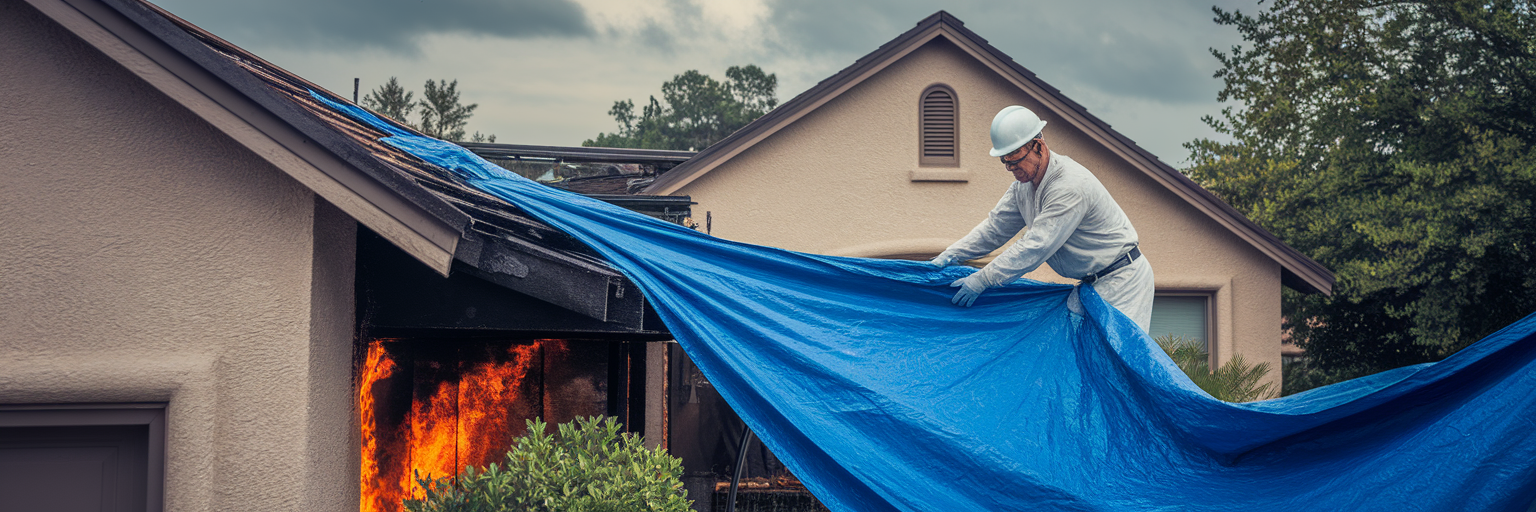
While you wait for your insurance adjuster, a professional restoration team can begin damage mitigation. This term refers to the immediate actions taken to stop existing damage from getting worse. It is a critical phase that preserves your property and prevents costly long-term problems. This is not about rebuilding. It is about stabilization.
Key mitigation techniques include:
- Placing heavy-duty tarps over the damaged roof to protect the interior from rain.
- Boarding up broken windows and other openings to secure the home from weather and intrusion.
Perhaps the most urgent concern after a fire is the water left behind by firefighting efforts. This massive amount of water saturates everything, from drywall to flooring. Professionals use industrial-grade equipment like high-volume water extractors, powerful air movers, and commercial dehumidifiers for rapid drying. In Manatee County, our high humidity creates a perfect breeding ground for mold, which can begin to grow in as little as 24 to 48 hours. This makes professional water damage restoration not just about drying, but about preventing a serious health hazard. Prompt water removal is also a key part of any comprehensive smoke damage cleanup Florida plan, as lingering moisture can cause soot to set permanently into surfaces, making it much harder to remove.
Understanding the Professional Restoration Process
The path from a damaged structure to a restored home can seem complex. A professional team will demystify the fire damage restoration Manatee County process by following a clear, structured plan. This roadmap ensures every aspect of the damage is addressed methodically.
Soot and Smoke Removal
Technicians use specialized cleaning agents and dry-cleaning sponges to carefully remove acidic soot residue from walls, ceilings, and other surfaces. HEPA-filtered vacuums are used to capture fine particles without releasing them back into the air.
Odor Elimination
Surface cleaning alone is not enough to remove the persistent smell of smoke. Professionals use advanced techniques like thermal fogging or ozone generation, which neutralize odor particles trapped deep within porous materials like wood, drywall, and insulation.
Contents Cleaning and Restoration
Salvageable personal belongings are carefully inventoried, packed, and transported to a secure facility. Here, specialists use dedicated equipment to clean and restore everything from furniture and electronics to documents and textiles before returning them to your home.
Structural Repairs and Reconstruction
This is the final phase where your property is rebuilt. It can range from replacing drywall and flooring to major structural work. The goal is to return your home to its pre-fire condition, ensuring it is safe, sound, and familiar once again.
| Phase | Key Actions | Purpose |
|---|---|---|
| 1. Assessment & Mitigation | Inspect structural safety, board-up openings, tarp roof, begin water extraction. | Ensure site safety and prevent further damage from weather or water. |
| 2. Soot & Smoke Removal | Clean surfaces with specialized agents, use HEPA vacuums. | Remove acidic soot and smoke residue to prevent permanent staining and corrosion. |
| 3. Deodorization | Employ thermal fogging or ozone treatment. | Neutralize smoke odors embedded in porous materials that cleaning alone cannot reach. |
| 4. Contents Restoration | Pack-out, clean, and restore salvageable personal belongings. | Save and recover personal items, from furniture to documents. |
| 5. Reconstruction | Repair or replace drywall, flooring, electrical systems, and structural elements. | Return the property to its original, pre-fire condition. |
Note: This table outlines the typical workflow for a comprehensive restoration project. The duration and complexity of each phase depend on the extent of the initial damage.
Navigating Fire Recovery in Manatee County’s Climate
Recovering from a fire in Florida presents unique challenges that require local expertise. The combination of firefighting water and Manatee County’s persistent coastal humidity creates an aggressive environment for mold growth. This is not a minor issue. It is a significant health risk that demands immediate attention. Professional drying and antimicrobial treatments are not just recommended; they are non-negotiable for protecting your property and your family’s well-being.
Another local factor is hurricane season. A fire-damaged roof, even if it seems minor, is a major liability when a tropical storm is approaching. Fast, robust temporary repairs, like professional tarping and board-ups, become even more critical. A top-tier fire damage repair company Manatee FL will use modern technology like thermal imaging cameras to detect hidden moisture pockets within walls and floors that would otherwise fuel mold growth long after the surface seems dry.
Because fire, water, and storm risks are so intertwined here, choosing an integrated service provider is a smart move. Working with a single company that expertly handles all aspects of disaster recovery ensures a coordinated and efficient response, whether the initial damage was from a fire or a subsequent storm.
Choosing a Dependable Restoration Partner
During such a stressful time, selecting the right restoration partner is one of the most important decisions you will make. This choice will shape your entire recovery experience. Look for a company that meets these essential qualifications:
- IICRC Certification: This certification is the industry’s gold standard, ensuring technicians are trained in the latest restoration techniques and safety protocols.
- 24/7 Availability and Rapid Response: Fires are emergencies. A company must be ready to respond immediately to mitigate damage and secure your property at any time of day or night.
- Local Manatee County Experience: A local company understands our region’s building codes, permitting processes, and unique environmental challenges, ensuring a smoother process.
- Full-Service Capabilities: Choose a provider who can manage the entire process from emergency mitigation to final reconstruction. This simplifies communication and ensures a seamless recovery.
Finding the right partner provides more than just technical repairs; it offers peace of mind. By selecting a company that embodies these qualities, you can trust that your home is in capable hands. When you are ready, do not hesitate to reach out to a certified team for immediate help and guidance.